Archive for April, 2011

Gracious Uncertainty

Thursday, April 28th, 2011

Gideon must have thought God had lost all grip on reality.  Imagine going to war with 300 soldiers and expecting to win. Ludicrous. But that’s exactly what God had told him to do—whittle down his army until only 300 men remained. And so he obeyed. (Judges 7)

Call it ludricous, or call it gracious uncertainty. Going to battle with so few warriors may have seemed like certain suicide to the human strategist, but not to God. His ways surpass all understanding sometimes.

“We are uncertain of the next step, but we are certain of God,” writes Oswald Chambers. “”As soon as we abandon ourselves to God and the task He has placed closest to us, He begins to fill our lives with surprises…Leave everything to Him and it will be gloriously and graciously uncertain how He will come in—but you can be certain that He will come. Remain faithful to Him.”

Gideon remained faithful to God even though he had no clue how the details would come together. How do you and I fare next to Gideon when God gives us tasks that seem impossible or senseless?

What surprises has God given you when you’ve been faithful to His call?

When God Says Go

Wednesday, April 27th, 2011

When God gives a divine assignment, our human tendency is to say, “Who, me? I can’t do that.” Fear looms, and we offer excuses such as, “I’m not smart enough,” or “I don’t have the skills necessary.”

questions

Gideon’s story is a prime example. When God tells him to rescue Israel from the Midianites, he immediately focuses on his inadequacy. “But Lord, how can I rescue Israel? My clan is the weakest in the whole tribe of Manasseh, and I am the least in my entire family!” (Judges 6:15)

Sound familiar? I’m dealing with similar fears right now as I plan an event designed for business women. I’m convinced this is a God-given task and I’m moving forward, but part of me says, “Who, me? I don’t have anything to offer these corporate gals. Why would they want to come? What if no one registers? What if it’s a complete flop?”

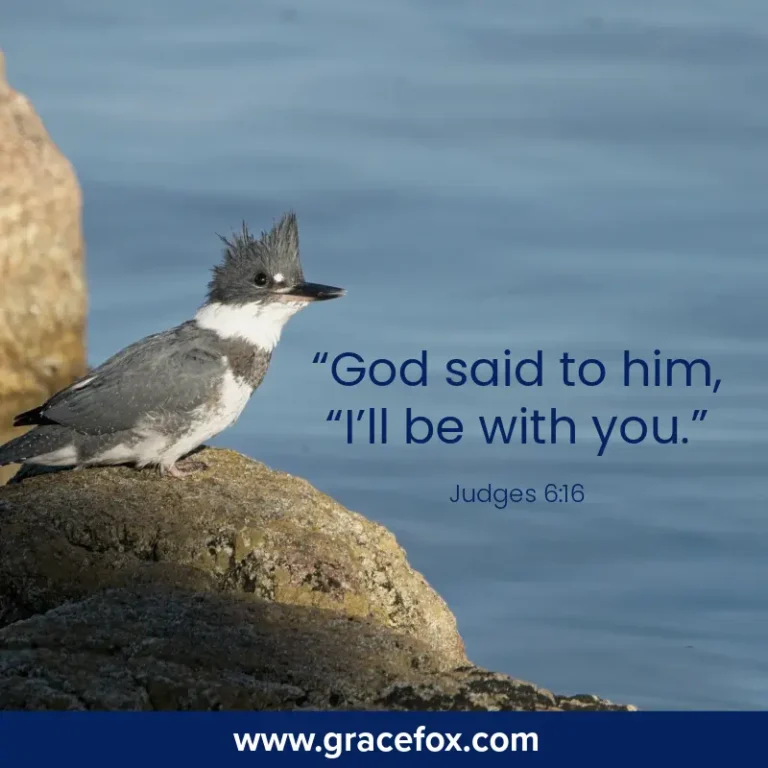
Then I remember Gideon and God’s message to him: “Go with the strength you have, and rescue Israel from the Midianites. I am sending you” (v.14).

These words bring me courage. They assure me that, when God gives an assignment, He simply wants me to say yes and to move forward with whatever skills He’s given me now. “Go with the strength you have,” He says, and He looks after the details.

I also find courage in a promise God made, not once but twice. “I will be with you,” He said to Gideon (vv. 12,16). Herein lies the ultimate secret to overcoming fear. God’s presence in our lives—what more do we need? What more do I need as I move ahead with planning this event?

Can you relate to Gideon and me? If so, how does the command, “Go with the strength you have,” encourage you? How does God’s promised presence impact you?
<p><a href=”http://www.freedigitalphotos.net/images/view_photog.php?photogid=721″>Image: renjith krishnan / FreeDigitalPhotos.net</a></p

The Best Way to Begin and End Each Day

Monday, April 25th, 2011

Three decades ago, I realized the importance of dwelling on positive thoughts specifically when I wake and when I fall asleep.

day's end in Oregon

The lesson came after my fiancé broke our engagement. In the first days and weeks following the breakup, I’d fall asleep focused on my pain and feelings of rejection. I’d wake dreading the day, knowing I’d spend it wrestling with disappointment and self-pity. The result? I spiraled into a bin of negative emotions and began believing the enemy’s lies about my being unloved and worthless.

I knew that the content of my thoughts could determine whether or not I could survive the breakup and successfully move on with my life. And so, I took action. I began meditating on Scripture as I fell asleep at night, and in the mornings, before I rolled from bed, I prayed a simple prayer: “This is the day that You have made, Lord. Teach me to rejoice and be glad in it.”

These simple actions made a huge difference for me. The pain eased, replaced with hope and anticipation about my future in God’s hands. They also established a pattern that I’ve tried to maintain ever since.

Beginning and ending our day with thoughts focused on God follows a gentle reminder found in Psalm 92:2—“It is good to proclaim your unfailing love in the morning, your faithfulness in the evening.”

God knows best. He understands how important our thought life is, and because He loves us, He gives us the key to managing it successfully. Let’s do what He says. Let’s embrace His counsel to remember His love and faithfulness when the day begins and ends. Doing so takes effort, but it’s crucial to overcoming fear, stress, and disappointment.

Have you practiced this discipline? If so, what difference has it made in your life?

Living in a Whirlwind

Friday, April 22nd, 2011

The past three weeks have looked like a whirlwind to me. First, we spent two weeks in Slovakia and Holland. Upon our return to Canada, we were home only 36 hours before I flew to California to attend the Mt. Hermon Christian Writers Conference (fantastic!). I returned home on Wednesday  to find that my daughter-in-law has been very ill for several days. Yesterday I babysat the grandkids so she could rest and our son could go to work. More of the same today. All that said, my blog posts have been non-existent this week. I plan to be back on Monday, however. In the meantime, have a great weekend. Looks like the sun has decided to appear here today, so this Grandma might take the grandbabies to the park this afternoon.

Enjoy Easter! May your hearts be blessed as you ponder on its meaning.

Doing Life According to Our Own Ideas

Friday, April 15th, 2011

Speaking at women’s retreats gives me many opportunities to hear heart-breaking stories. Some gals tell me about being abandoned by their husbands. Some admit, with great remorse, to having an affair or choosing to abort their child. Some have suffered physical or sexual abuse. There’s no end to the list of hurts they suffer.

Sometimes these hurts stem from someone else’s issue. Sometimes they’re the direct result of decisions they’ve made. Sadly, some women blame God for their pain rather than taking responsibility for it. Their circumstances cave in, and then they wonder why.

God’s word tells us that we have a choice about how to do life. We can either play by His rules (designed to protect us), or we can make up our own. Trouble is, apart from God’s input, our thoughts about how to do life often get us into trouble. Psalm 81:11,12 says, “My people wouldn’t listen. Israel did not want me around. So I let them follow their own stubborn desires, living according to their own ideas.”

Let’s face it—we humans aren’t so smart sometimes. We think we know what’s best for us, but in reality we don’t. Here are some examples:

  • We feel attracted toward someone other than our husband, and we end up in an affair thinking it will satisfy our emotional needs. Bad idea.
  • We think we need a bigger house or a nicer car when in reality, smaller or older will suffice. Uncontrolled or unwise spending usually results in financial bondage. Bad move.
  • We think we’re too busy to spend time in God’s word on a regular basis. That means we rely on our own strength and wisdom rather than His. Bad idea.

God gives us the freedom to choose how we want to live. We can either follow our own ideas as the Israelites did and pay the consequences, or we can do life His way. Personally, I believe His way is much, much smarter. It’s also filled with blessings.

“Open your mouth wide, and I will fill it with good things,” He says. “I would feed you with the finest wheat. I would satisfy you with wild honey from the rock” (Psalm 81:10,16). Which would we rather do–experience God’s presence and blessings for following His ways, or suffer for following ours? The choice is up to us. Let’s be smart about it.

“God, forgive us for thinking our ideas are better than Yours. Grant us humility to embrace Your ways as right and good. Make us wise as we travel this journey between here and heaven. In Jesus’ name, amen.”

http://www.freedigitalphotos.net/images/view_photog.php?photogid=851

WDJD?

Wednesday, April 13th, 2011

Thanks to my guest bloggers who covered for me while I was in Europe. My time overseas was wonderful. I attended our annual conference for our overseas missionary staff and enjoyed visiting with numerous women from various countries. Afterwards we visited one of our couples in Holland.

sitting in Corrie ten Boom's living room

While there, I spoke at an international congregation’s women’s event. The organizers had hoped that 50 women would come; 130 showed up! At least one woman placed her faith in Christ that night. It was an amazing time, but it’s always nice to come home. I’m back in my office, at least for a few hours! I’m heading to Mt. Hermon, California, to attend a writers conference for a few days. Hopefully I’ll be able to keep up with the blog. Here’s today’s thought.

******

The popular acronym, WWJD, spread across the nation several years ago. “What would Jesus do?” asked teens and adults alike.  The question was a good one; it helped keep Christ’s followers on task when they faced moral decisions.

Here’s a similar question, posed by the acronym WDJD – What did Jesus do? It, too, helps keep us headin’ the right direction in our everyday lives because it encourages us to look at His attitudes and behaviors as revealed in the Scriptures. One story, in particular, fascinates and challenges me.

Luke 15:1,2 says, “Tax collectors and other notorious sinners often came to listen to Jesus teach. This made the Pharisees and teachers of religious law complain that he was associating with such sinful people—even eating with them!”

WDJD? Use your sanctified imagination for a moment. Picture Jesus sitting at a kitchen table with a half dozen men and women of questionable character. They sip soda and nibble fries as they talk about stuff that really matters: how to forgive enemies, how to say no to temptation, how to love God more than money and temporary pleasures. The group fires questions at Jesus, and He answers using words they understand. He smiles when their eyes light up, and He lingers with them into the evening hours despite the gossip happening behind His back: “Scandalous, this is! What in the world is He doing? Why is He hanging out with such scum? What kind of example is He setting, anyway?”

WDJD? He intentionally spent time with those whose lives resembled anything but holiness, and He spoke spiritual truths using vocabulary that made sense to them.

Jesus’ example challenges me to leave the comfort of my Christian circles and intentionally spend time with those who don’t know Him. What am I going to do about it? Two things:

  • When I look around our townhouse complex, I realize that I know only a couple of my neighbours. What’s with that? I’m so busy doing ministry elsewhere that I haven’t made time to share God’s love with those who live nearby. I plan to change that by inviting them for coffee, one or two households at a time.
  • I plan to begin establishing relationships with women in the corporate world. God placed that group on my heart more than a year ago, and I’ve been taking deliberate steps to respond. I’m planning a weekend retreat designed for business women who desperately need renewal, and I’m thinking of ways to shower love on them. Some people might think I’m crazy—that’s okay, I wonder the same thing as I look at the logistics. But I believe God wants to draw them to Himself, and He’s asking me to get involved. I’d appreciate your prayers.

How about you? Jesus intentionally spent time with unbelievers. What does His example say to you?

Let Me Show You What Love Can Do

Monday, April 11th, 2011

Welcome back, Kathleen. Thank you for being a guest blogger today.

*****

My old neighbour, Bill Peasley, had a good friend in Australia, an archeologist who led camel and jeep expeditions into the desert. On one such expedition, an abandoned, half-wild dog skulked around their campsite, appearing and disappearing like a shadow with an identity crisis. An almost fox, almost German shepherd; scrawny, limping badly, and flea-ridden. Once upon a time the dog may have been attractive. No more. The poor creature was half-dead of starvation—almost past the point of hunger.

The members of the team, intrigued and compassionate, fed it scraps and provided water. Soon the dog didn’t slink away anymore. Its pleasant temperament was hard to ignore, and the expedition members worried about what would happen to the creature when they left the area.

Eventually the group broke camp and prepared to move on. But now they had a problem. Abandoning their new friend seemed unthinkable. Outback conditions are harsh. The dog could end up as supper for a wild dingo. It may even die of starvation and thirst.

A compassionate couple volunteered to take it home. Under their care, the dog, christened Mungilli for the claypan at which it was found, became sleek and handsome, a loyal family pet.

Bill loved that story. His friend sent before and after photos of the dog, and Bill carried them with him like a proud grandpa. He showed those photos to anyone who would stand still long enough to listen.

Every so often Bill phoned me to ask if he could come over and show me something. And each time he walked up my garden path, that particular determined look on his face and a sheet of paper in his hand, I knew what he was up to.

He always began the same way. First he unfolded the paper with copies of the two photos on it. His hand trembled slightly, and I knew he’d forgotten that I’d seen those photos often. Or maybe he knew I needed to see them again.

“Kathleen,” he always began, his eyes puddling just a tad. “I have a good friend in Australia. He sent me this.” Then he’d swallow, crinkle the corner of the paper in his hand and say some of the most beautiful words I’ve ever heard. “Let me show you what love can do.”

It happened every time. My throat constricted, my hand reached for the photos, and once again I’d listen to the story, told as only Bill could tell it. And I’d think of these words by John Newton: “Amazing grace, how sweet the sound, that saved a wretch like me. I once was lost, but now am found, was blind but now I see!”

Tiptoeing around the edges of all our cozy campsites is someone who needs redeeming love and amazing grace. Who’s skulking around yours? For God’s sake, show them what love can do.

Image: Simon Howden / FreeDigitalPhotos.net

What does Your Cross Mean?

Friday, April 8th, 2011

Meet my good friend and guest blogger, Kathleen Gibson. Her weekly faith and life newspaper column, Sunny Side Up, is available online at www.kathleengibson.ca . She is the author of West Nile Diary, One Couple’s Triumph Over a Deadly Disease, and Practice by Practice, the Art of Everyday Faith.

*****

I spent a few pleasurable years working as a floral designer. One day, as I prepared to close our shop, a very fair young man dashed in the door. “I’d like a dozen red roses, please,” he panted.

“Aha,” I said, opening the cooler. “On your way to see someone special?”

“Yeah, my girlfriend.”

I chose twelve of the nicest scarlets. As I stripped the thorns, gave each flower a fresh cut, and inserted them in water picks, he chattered eagerly about his gal.

Noticing an unusual cross around his neck I commented that it looked handmade. “Tell me about it,” I said. Somewhat reluctantly he switched topics from girl to cross, explaining how it was made and how he’d come to own it.

I decided to push him. I don’t know why; I’m not always so bold. “But what does it mean to you, personally? Does the symbol of the cross have any special significance for you?”

His pale skin flushed red as a prairie sunset. He glanced around for an escape, cleared his throat, and shifted from left foot to right. When he finally spoke, he stammered. “Well, uh, yeah.”

I was beginning to enjoy the show. “Really? How so?”

The young man took a deep, slow breath, and suddenly his demeanor changed.  He stood a little taller, looked me directly in the eye. “I’m a Christian. I believe something important happened on a cross a very long time ago. Jesus Christ died there for my sins. That’s why I wear this cross, because it reminds me of that.”

I chuckled. “Well done, young man. I’m a Christian too. That was a test, you see. You can save your Bible verses for the next person who asks. They might need them more than I.” He laughed then. We both did, he in relief, and me at his relief.

I wear a cross, too. A gold one; given me by my sister and brother-in-law as a thank you gift for caring for their three small children during a very difficult time. I value it for that reason. But there’s another reason I cherish the cross about my neck. Like the young man in the flower shop, my cross represents far more.

The Bible tells me I was born contrary. A sinner in need of forgiveness and connection with the greatest power in the universe. The cross is the plus sign that connects the power of a Holy God with his rebellious creation. Me. The sum of those two parts transformed my contrary nature into something fresh and new, erased my sin, and changed my eternal destiny. All I had to do was accept, love, trust, and obey the Jesus who died on that cross and rose again three days later.

If you wear a cross, are you prepared to answer for it?

Image: graur razvan ionut / FreeDigitalPhotos.net

Maybe it’s Time We Pay Attention

Wednesday, April 6th, 2011

Thanks, Marcia, for your third guest blog!

******

“Who are you?”

The woman’s eyes were cold. By the time I said my name her eyes had flicked away, scanning the room for someone of more significance. She had already dismissed me. I watched her from time to time, moving about in the crowded room. It seemed there were few people of significance there. Her eyes kept roaming. Sometime later a mutual friend tried to introduce us again. “Who are you?” she asked. I didn’t answer. She didn’t notice.

Most of us have been treated that way at one time or another. Some people are slightly more skilled at this art of dismissal, but the effect is the same. Those they encounter are left feeling insulted. On the other hand, most of us have met people who can make a person feel as though she is the only one in the room worthy of their attention. Their eyes never waver. They leave you feeling encouraged and sometimes even blessed.

Canadian author Lorna Crozier is quoted as saying – “Every time you pay attention, you praise.” I thought of this quote the other night when my daughter arrived home in the middle of one of my favourite television shows. She and her friends bounced into the room, noisy with laughter. I kept telling them to be quiet, never taking my eyes off the television screen. Eventually they left.

It wasn’t until later that I realized what I’d done. My sin was as great, or greater than the sin of that woman with the roaming eyes. I had failed to pay attention and I had done the opposite of praise. Though my daughter laughed at me that night, she had every right to feel insulted. Though I did not show her the respect she deserved, she gave me a hug before bed that night and had a smile in the morning. She’s a good kid. Sometimes I don’t deserve her.

Unfortunately my daughter isn’t the only one I ignore. I often go through the day without taking any notice of the blessings around me. They don’t register because I do not realize their significance. They have become too familiar – the rain that nourishes the ground, the green grass and ripening fields that feed us, the fat cattle grazing behind good fences. And the people go unnoticed too – the mailman who stops on my street every day, the policeman patrolling in his car, the neighbour who always waves. I’ve failed to pay attention and I’ve failed to praise.

When we fail to praise those things and those people, we fail to praise the God who created them. We are like that woman whose eyes kept moving – we are telling God He just isn’t significant enough. We want someone a little more interesting, please. Psalm 48:1 says – “Great is the Lord and most worthy of praise.” He’s a good God. We don’t deserve Him. But He’s always ready to smile upon us, always ready to bless us. Maybe it’s time we started paying attention.

http://www.freedigitalphotos.net/images/view_photog.php?photogid=2125

Hard Questions

Monday, April 4th, 2011

Marcia Lee Laycock contributes again…

******

It seemed fitting that the sky hung heavy and low. It seemed right that the wind was bitter, howling with the fierce shriek of winter around a tiny country cemetery. There was a very small hole in the ground and a very tiny casket to be put into it. It seemed appropriate that we all stood numbed by the cold of that day.

A friend of mine once wrote a poem about Adam, Eve and God in the Garden of Eden. It was a good poem, well constructed with a strong rhythm and powerful images. One of those images often comes to mind when bad things happen to good people. It’s an image of God curled into a fetal position, and the wailing sound of His weeping.

Sometimes we ask hard questions. Why did that baby have to die, God? Why is my friend suffering with a painful cancer? Why are those people in Africa starving? We don’t usually get a good answer to those questions. They leave us numb and they leave us wondering if God is there.

But then there is that image and that sound. In my friend’s poem God mourned the first disobedience, the first break in His relationship with the creatures He put on the earth.

The picture my friend painted with his words was of a God who cares, a God who feels our pain, a God who mourns with us, especially at the graves of tiny babies.

He is also a God who will answer. He is a God who acted to redeem all that was broken in our world. He is a God who continues to do so. The redemption was accomplished on the cross of Calvary, but it is not yet complete. As the writer of the book of Hebrews said, God “… waits for his enemies to be made his footstool, because by one sacrifice he has made perfect forever those who are being made holy” (Hebrews 10:13).

The process is sometimes painful, but the world will one day be made entirely new, entirely redeemed. The scriptures talk about creation groaning as we wait for that day. The groans do not fall on deaf ears, nor will they remain unanswered forever. One day that tiny baby will rise, whole and perfect as God intended him to be.

God’s plan is unfolding. What then, should we do in those times when we groan and feel there is no answer? Again, scripture tells us – “To act justly, to love mercy and to walk humbly with your God” (Micah 6:8).

Humility before God bows the knee and continues to believe. Humility before God acknowledges His sovereignty and calls Him good. Even when babies die and the pain of this world overwhelms, humility before God says, “Blessed be the name of the Lord.”

Image: healingdream / FreeDigitalPhotos.net